Technical Specs
E-Powertrain
Chassis & Aero
Suspension
Autonomous
Ergonomics
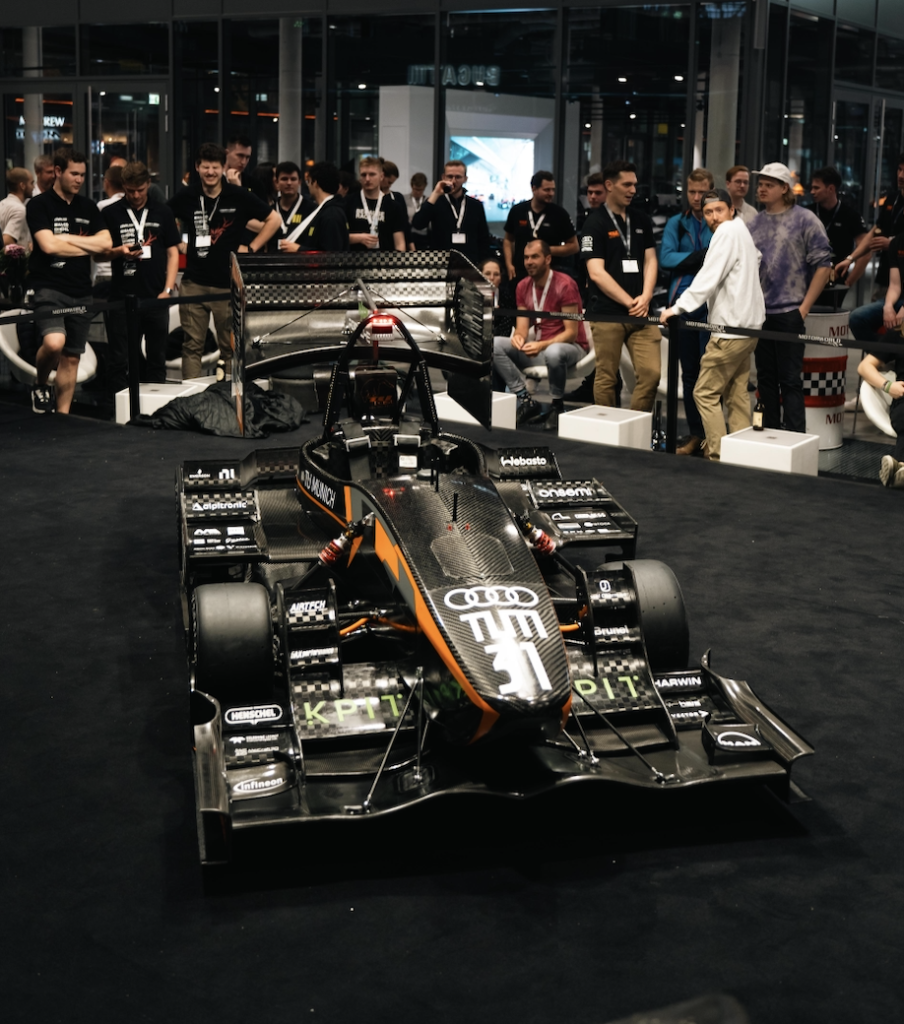
The xb024 continues TUfast’s combined electric + driverless platform, while introducing major concept changes, including a shortened wheelbase, resulting in a new aerodynamic package, a new ergonomic concept, a revised suspension architecture, and a stronger emphasis on vehicle body stiffness. Additionally, every detail of the electronic and powertrain system was investigated in order to increase the performance of the whole vehicle. Due the major changes made on the xb024 combined with a limited amount of testing time, the performance during the competitions was not up to the level expected from TUfast. However, the xb024 stands proud in the lineup of TUfast’s vehicles, implementing multiple performance enhancing concepts,while providing a substantial foundation for the future success of the vehicles from TUfast.
Dyno-characterized electric machines combined with a self-developed SiC inverter using MTPA control to reduce current demand and increase torque-vectoring headroom within the 80 kW limit.

A testing-driven accumulator concept with optimized energy capacity and enhanced BMS algorithms for accurate state estimation and performance-oriented control integration.

A simplified low-voltage architecture with distributed power units and CAD-integrated, mil-spec wiring improves reliability, thermal behavior, and mass efficiency.
A unified, traceable development workflow ensures reproducible builds, strict code quality, and seamless linkage between hardware and software documentation.
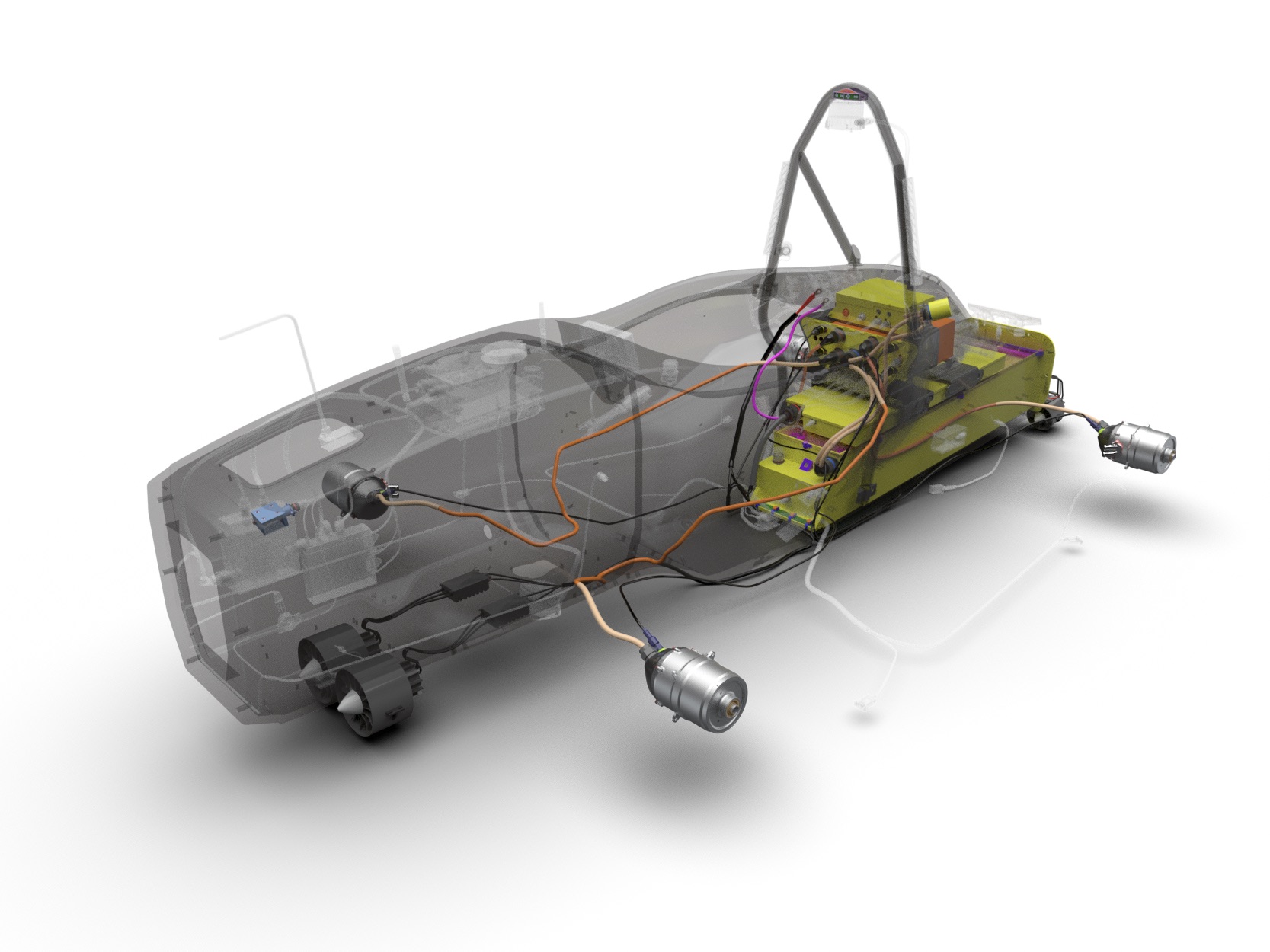
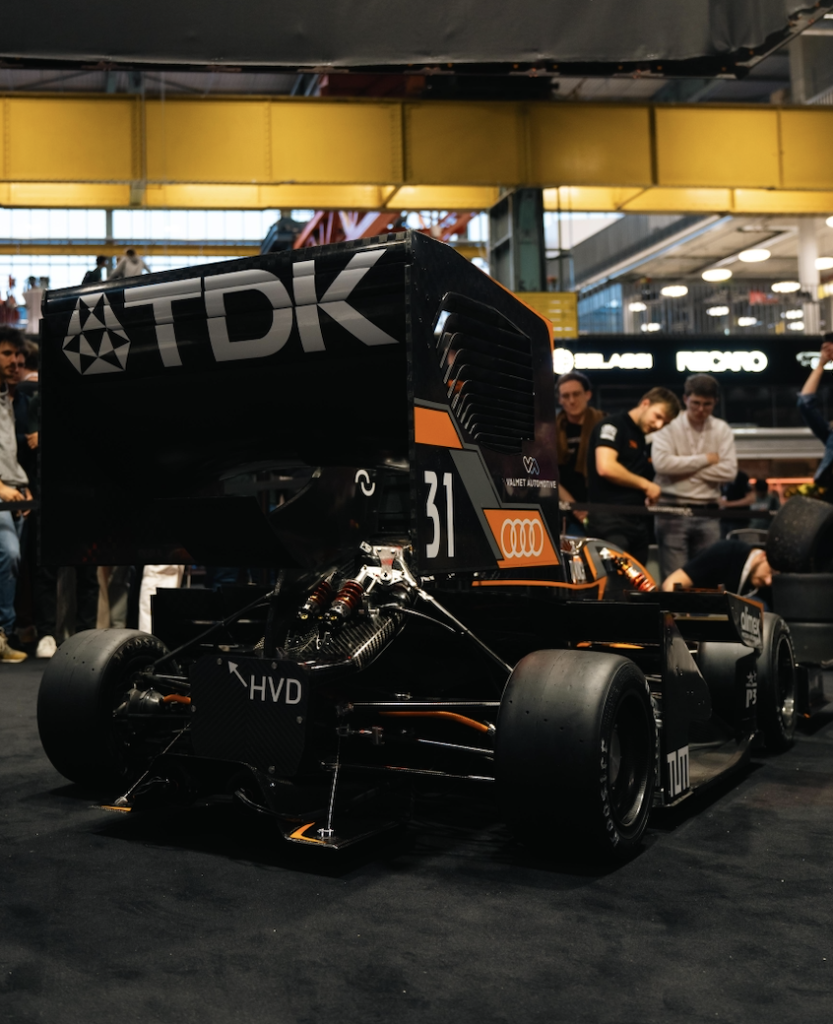
A full CFRP monocoque designed for high stiffness and impact resistance. The structure is manufactured using prepreg materials and autoclave curing, with the layup derived from extensive material testing and iterative structural analysis. Local reinforcements and integrated CFRP/aluminum inserts ensure reliable load transfer at critical interfaces.
A highly integrated aerodynamic package combining multi-element wings, a full undertray, and a four-fan Powerground system. Active pressure management through front and rear fans enables aggressive diffuser expansion and improved flow attachment, while a refined cooling layout eliminates the need for radiator fans. Extensive CFD-to-track correlation guided the aerodynamic concept, resulting in a rear-biased balance and high overall downforce.
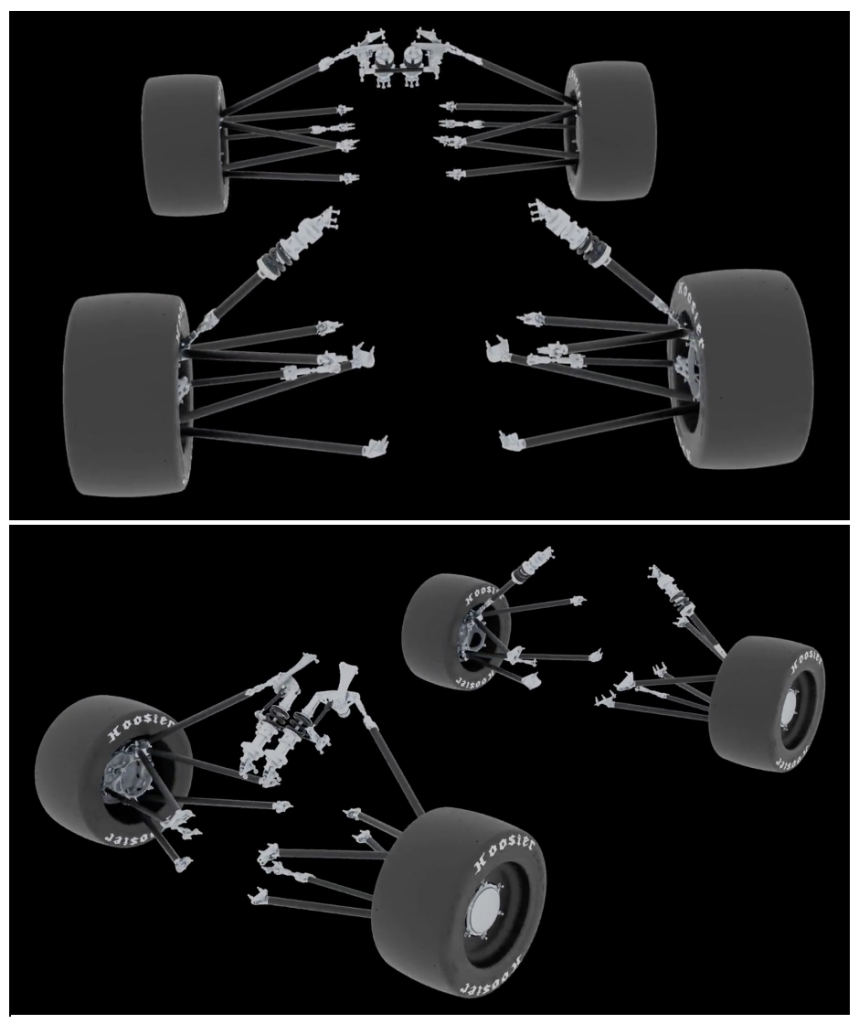
The suspension concept focuses on agility and consistent tire utilization through optimized kinematics and reduced compliance. A short wheelbase and a stiffness-optimized structure improve transient response, while a lightweight wheel package minimizes unsprung mass and aerodynamic wake. Design decisions are supported by a self-developed transient lap-time simulation, enabling system-level optimization based on high-fidelity vehicle models.
Direct damper actuation with simplified packaging and reduced mass.
Compact top-center damper layout with integrated anti-roll system optimized for aerodynamics.
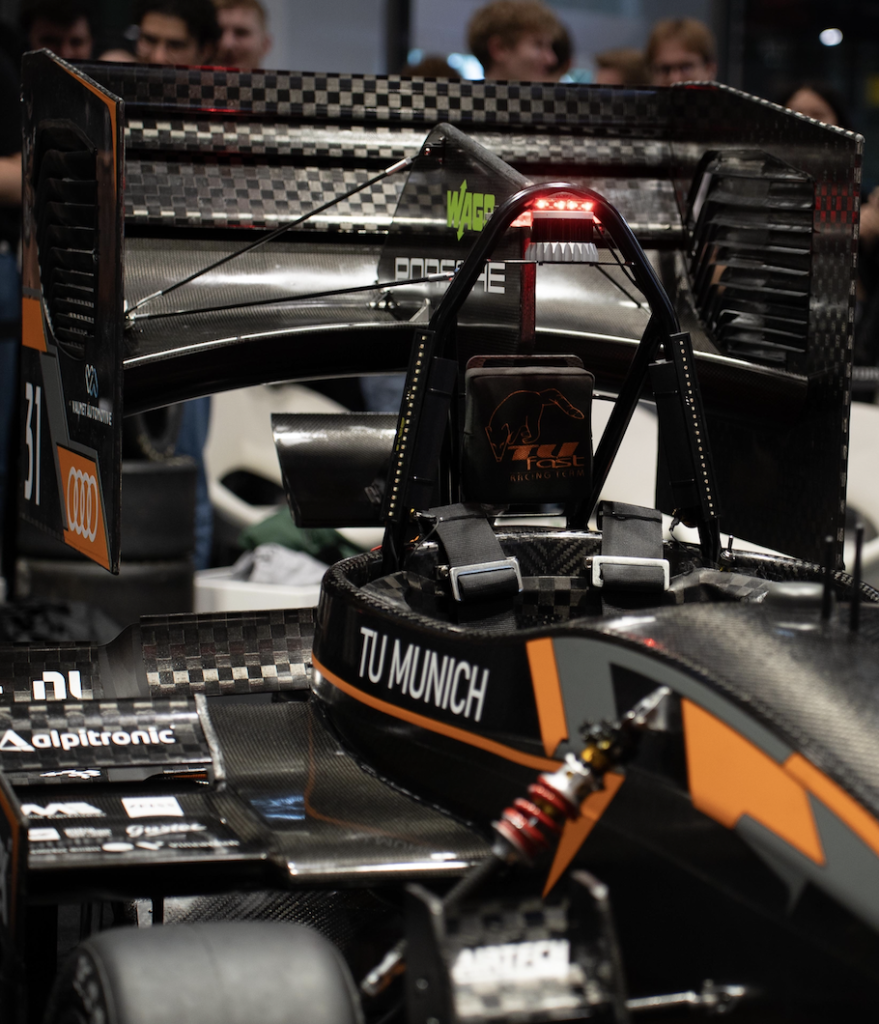
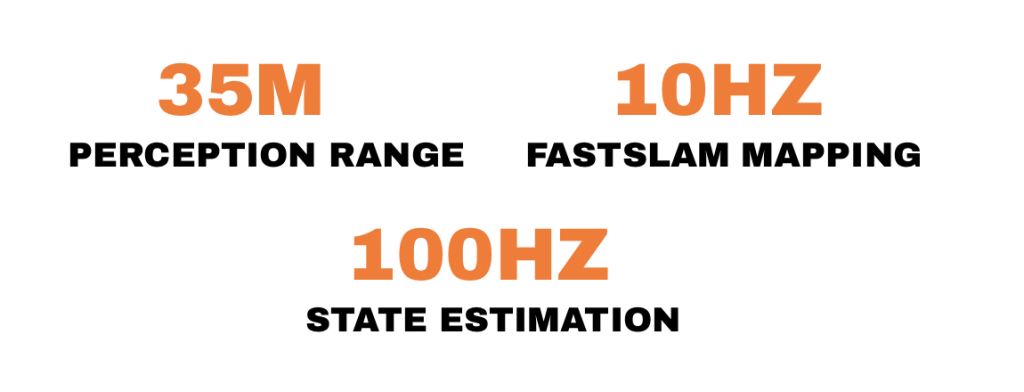
A modular ROS-based autonomous stack combining long-range LiDAR perception, high-frequency localization, and robust trajectory planning. The system significantly extends perception range and improves reliability through integrated validation and continuous testing.
TUfast e.V.
School of Engineering and Design
Technical University of Munich
Boltzmannstraße 15
85748 Garching b. München
Email: info.racing@tufast.de
Office: +49(0)89/289-15158
Phone Workshop:
+49(0)89/324624-500
Fax: +49(0)89/289-15162